What to Do When a Pipe Bursts in Your Flat: An Emergency London Guide
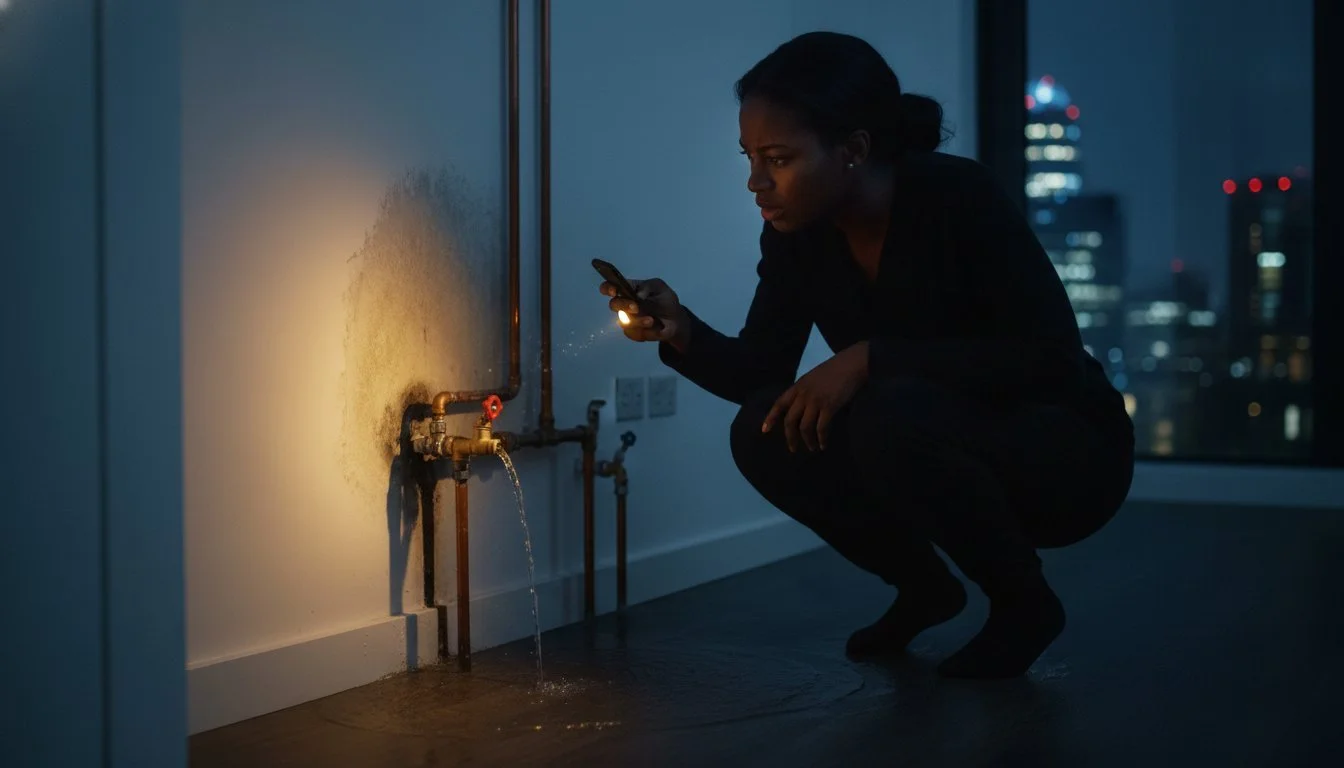
You wake up at 2:00 AM to the sound of rushing water and a hallway carpet that feels like a heavy sponge. In a high-density London building, this isn't just your problem; it's a ticking clock for the flat downstairs too. Knowing exactly what to do when a pipe bursts in your flat is the only way to prevent thousands of pounds in structural damage and avoid a difficult conversation with your neighbors. You feel the panic rising, but right now, you need a clear head and a fast hand to stop the flow before it reaches the electrics.
We understand the sheer stress of a sudden plumbing crisis, and we're here to provide the technical authority you need to regain control. This guide offers a rapid-response strategy to stop the water immediately, protect your property, and secure the expert repairs required to fix the leak. We'll show you how to locate hidden stopcocks in converted properties and explain why professional emergency plumbing repairs are essential for your long-term safety. Follow these steps to move from chaos to a dry, secure home with the help of our round-the-clock availability and dependable expertise.
Key Takeaways
Shut off the internal stopcock immediately and drain all cold water taps to stop the flow of water.
Follow a rapid-response checklist for what to do when a pipe bursts in your flat to protect downstairs neighbors from ceiling damage.
Isolate the electricity at the consumer unit if water enters light fittings or sockets to prevent electrical hazards.
Understand why London’s high mains water pressure makes DIY temporary fixes dangerous and ineffective.
Secure expert emergency plumbing repairs to address the root cause and provide a permanent, professional solution.
Table of Contents
Immediate Steps to Stop Water Damage in Your Flat
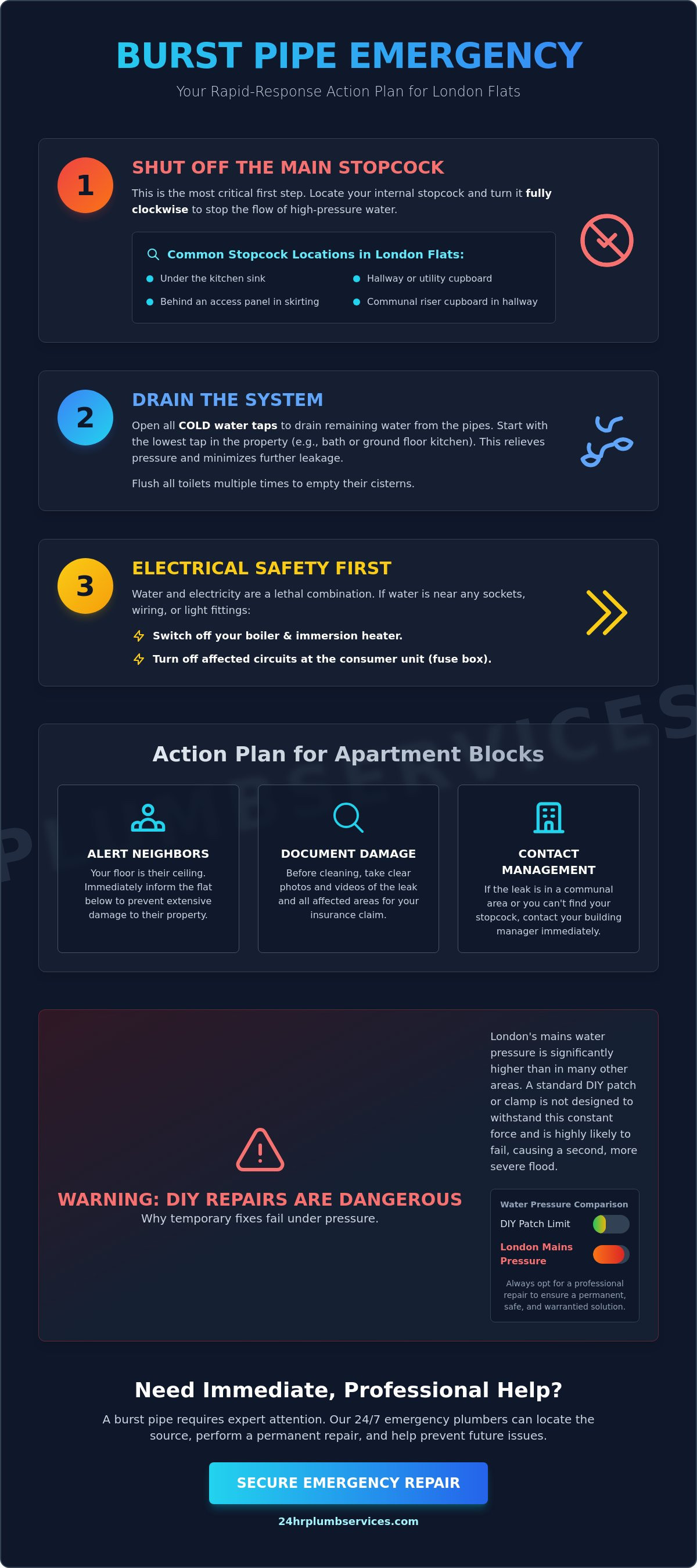
The sound of water spraying against a wall is the start of a race against time. You must act within seconds to minimize the impact on your belongings and the flat below. Knowing what to do when a pipe bursts in your flat begins with one critical action: shutting off the water at the source. Locate your internal stopcock and turn it firmly clockwise. This move stops the flow of high-pressure mains water into your home. Once the valve is closed, you've successfully cut off the supply, but the water already inside your pipes still needs a safe exit.
Finding Your Stopcock in a London Flat
In a standard house, the stopcock is usually easy to find. In a London flat, it's often a game of hide and seek. Start your search under the kitchen sink, as this is the most common location. If it's not there, check the hallway cupboard or near the entrance door. Victorian conversions often have stopcocks tucked under floorboards or behind small access panels in the skirting board. If you live in a modern apartment block, look for a communal "riser" cupboard in the hallway outside your flat. You might need a flathead screwdriver to open these panels. Don't wait for a flood to find it; locate it today.
Draining the System Safely
Closing the stopcock stops new water from entering, but several liters remain trapped in your internal plumbing. You need to remove this volume before it leaks through the burst. Open every cold water tap in the flat, starting with the one at the lowest point. This is usually the bath or kitchen tap. Let the water run until the flow stops completely. This relieves the internal pressure and prevents further spraying from the burst pipe. If you're worried about water scarcity, collect the final few liters in a bucket. You can use this later to manually flush toilets, as your cisterns won't refill once the main supply is off.
A burst pipe poses a direct threat to your heating system. You must switch off your boiler and immersion heater immediately. Running these systems without a steady water supply can cause "dry-firing," which leads to overheating and expensive boiler repairs. If the leak is near any sockets or light fittings, go to your consumer unit and kill the power to those circuits. A thorough understanding water damage reveals that moisture and electricity are a lethal combination. Safety is your absolute priority. While you wait for a professional to handle the leak detection and repair, keep the area as clear as possible.
Before you start the cleanup, grab your phone. Take clear photos and videos of the burst pipe, the water levels, and any damaged furniture or electronics. Your insurance company will require this evidence to process a claim effectively. Flush your toilets multiple times to empty the cisterns, which further reduces pressure on the internal network. Once you've documented the scene, you can begin soaking up the mess while waiting for professional emergency plumbing repairs to arrive. Acting quickly now saves you from a much larger headache during the restoration process.
Managing a Burst Pipe in a Multi-Storey Building
In a London apartment block, your floor is someone else's ceiling. This architectural reality makes a plumbing failure a collective crisis rather than an isolated incident. When considering what to do when a pipe bursts in your flat, your first priority after shutting off the water is communication. If you see water pooling on your floor, it is already migrating through the floorboards. Run to the flat directly below you immediately. They need to move furniture and place buckets before the water penetrates their light fittings or plasterwork. This quick action can prevent a small leak from becoming a building wide insurance nightmare.
Identify the source of the water with precision. If water is dripping from your own ceiling, the burst is likely in the property above you. In this case, you must alert those neighbors so they can shut off their supply. If the water is emerging from a communal hallway or a riser cupboard, contact your building manager or concierge instantly. They have access to master valves and building schematics that individual residents often lack. For broader infrastructure issues, following Thames Water guidance ensures you understand where their responsibility ends and yours begins. This is especially important if the leak appears to be coming from the mains supply outside your property line.
Coordination with Neighbors and Management
Exchange phone numbers with your neighbors right away. You will need to coordinate for potential damp inspections or electrical safety checks over the coming days. If you suspect structural damage to the joists or communal walls, notify the freeholder or the residents association. Check your lease agreement to clarify repair responsibilities. Usually, internal pipes are the leaseholder's duty, while communal risers fall under the building's management. If the situation feels overwhelming, professional emergency plumbing repairs can help identify the exact point of failure and provide the necessary documentation for your management company.
Shared Stopcocks and Communal Water Mains
Many older London Victorian conversions operate on a shared water main. This means your internal stopcock might not exist, or it might control the supply for several units at once. If your internal valve fails or is missing, you may need to locate the external stopcock for the entire building. This is often found under a small metal cover on the pavement outside. You must inform all other residents before closing a shared valve to prevent damage to their appliances or heating systems. A sudden loss of pressure can cause airlocks in their boilers, so a quick knock on doors is a non-negotiable step before you cut the flow for the whole building.
Safety First: Dealing with Electricity and Structural Risks
Water and electricity are a lethal combination. Once you've shut the stopcock, the next threat is often invisible. Water travels through walls and floors, frequently finding its way into electrical conduits and socket backboxes. If you are wondering what to do when a pipe bursts in your flat and water is nearing your sockets, the answer is simple: cut the power. This isn't just about protecting your television or fridge; it's about life safety. A wet floor can easily become an electrified surface if a submerged cable is still live.
Following Thames Water advice on burst pipes ensures you cover these basic safety protocols before the damage escalates. While you wait for professional emergency plumbing repairs, your focus must remain on the integrity of your home. Plasterboard ceilings and walls can only hold so much weight before they fail. Identifying these risks early prevents physical injury and reduces the long-term cost of restoration. Use buckets and towels to manage the spread, but never prioritize your carpet over your personal safety.
Electrical Isolation Protocols
Go to your consumer unit immediately. This is usually located near the front door, under the stairs, or in a high-level hallway cupboard. Look for the main isolation switch, which is typically red or significantly larger than the individual circuit breakers. Flip it to the "off" position to kill power to the entire flat. If you see water dripping from a light fitting, do not touch the wall switch. The moisture inside the fitting can create a bridge for the current, leading to a severe shock. Leave it exactly as it is until a professional can verify the circuit is dry and safe. Avoid using any electrical appliances in damp rooms until they have been fully inspected and dried.
Preventing Structural Collapse
Plasterboard is incredibly absorbent and heavy when wet. When a pipe bursts between floors, the ceiling below acts as a reservoir. You might notice a dark patch followed by a distinct bulge in the plaster. This is a warning sign of an imminent collapse. If the bulge is significant, you can carefully "spike" it to release the pressure. Take a small screwdriver or a drill bit and poke a hole in the center of the bulge. Have a large bucket ready underneath to catch the rush of water. Releasing this weight prevents the entire ceiling section from crashing down. Once the water is contained, move all furniture and valuables away from the area. Open all windows to encourage airflow; good ventilation is essential to prevent mold growth, which can start within 24 hours.
DownloadFeedback & RecreateDelete
Why DIY Pipe Repairs Often Fail in High-Pressure Flats
London's water network is a complex beast. In many multi-storey buildings and modern developments, mains water pressure can exceed 3 bar. This is a significant force. While a roll of self-amalgamating tape might look like a quick fix, it is rarely a match for that level of constant pressure. If you are researching what to do when a pipe bursts in your flat, you must understand that temporary measures are just that: temporary. A DIY patch often masks a deeper structural weakness in the pipework, leading to a secondary, more violent burst just hours later.
Using incorrect materials or poorly fitted couplings can also lead to long-term property damage. London's older Victorian conversions are particularly sensitive to amateur plumbing. If you use the wrong metal fittings, you risk galvanic corrosion. This is a chemical reaction between different metals that eats through your pipes from the inside out. Beyond the physical risk, an uncertified repair can violate local water regulations and your home insurance policy. If a DIY fix fails and causes further flooding, your insurer may refuse to pay for the resulting damage. For a guaranteed solution, you should book emergency plumbing repairs from a qualified professional immediately.
The Risk of Temporary Patches
Leak tape is a 10-minute solution designed to buy you time while you wait for a plumber. It is not an overnight fix. High-pressure water will eventually find a way through the adhesive, especially as the pipe expands and contracts with temperature changes. A failed DIY attempt can also complicate the professional repair. If a plumber has to spend time removing layers of sticky residue or fixing a damaged thread caused by a cross-threaded DIY coupling, the job takes longer. Your priority should be isolation and professional intervention, not a hardware store workaround.
How Professional Plumbers Fix Bursts
A professional response involves more than just stopping the drip. It's about restoring the integrity of your entire system. Experts use high-grade copper or PEX replacements and professional-grade pipe cutters to ensure perfectly square, leak-free joints. Once the physical repair is done, a technician will perform a full pressure test. This ensures the new segment can handle the 3-bar London mains pressure without flinching. This process often includes:
Technical Precision: Using the correct flux and solder or high-tension press fittings for a permanent bond.
Leak Detection: Checking the surrounding pipework for stress fractures or thinning walls that may have been weakened by the initial burst.
Insurance Compliance: Providing a detailed, professional invoice that outlines the exact work performed.
This invoice is a vital document. It proves to your insurance provider that the work was carried out by a competent professional. This is essential for getting your repair and restoration costs reimbursed without a fight. A professional fix gives you peace of mind that the water will stay inside the pipes where it belongs.
Rapid Response: Why 24hr Plumbing and Heating is the London Choice
A burst pipe doesn't wait for business hours. When you're standing in several inches of water, the time for theory is over. You need a team that understands the geography and the specific plumbing challenges of the capital. We provide guaranteed 24/7 availability across all London boroughs and the entire M25 area. Our engineers don't just show up; they arrive in fully equipped vans stocked with high-grade components. This ensures we can complete most emergency plumbing repairs on the first visit. We believe in absolute transparency. We offer clear hourly rates with no hidden fees for emergency call-outs.
Our team includes Gas Safe registered engineers. They're specifically trained to handle bursts involving boilers or heating services. These situations are complex. They require a professional who can manage both water and gas safety simultaneously. If you've been searching for what to do when a pipe bursts in your flat, the final step is always ensuring the repair is certified and safe. We provide the technical authority needed to restore your home to its original state quickly and efficiently.
Our Emergency Service Standards
We treat every "water-on-floor" call as a top priority. Our dispatch system is designed to minimize property damage by getting a professional on-site as fast as possible. Because our engineers are local to London, they possess deep knowledge of the unique plumbing layouts found in Victorian conversions and modern high-rise blocks. While our expert is en route, we provide clear, declarative advice over the phone. This helps you maintain control of the situation while waiting for our arrival. This immediate support bridges the gap between your initial panic and our rapid resolution.
Booking Your Emergency Repair
Getting help shouldn't be complicated. Call our 24/7 dispatch line to receive an immediate arrival estimate from a seasoned professional. We handle the full spectrum of household crises. This includes everything from simple pipe replacements to complex hot water cylinder services and heating failures. We take pride in our no-nonsense approach and our commitment to the regional service area. Contact 24hr Plumbing and Heating now for immediate assistance to secure your home and protect your property from further damage.
Secure Your Flat and Restore Control Now
A burst pipe is a high-stakes emergency that demands immediate action. By isolating your stopcock and coordinating with your neighbors, you've already taken the most important steps to mitigate water damage. You now know how to handle electrical risks and why high-pressure London mains require professional-grade solutions rather than temporary DIY patches. Now, it's time to ensure your property is fully restored by a team with the technical authority to handle the job correctly.
Knowing what to do when a pipe bursts in your flat is only half the battle; the other half is getting an expert on-site. Our Gas Safe Registered Engineers provide a 24/7 rapid response across London, ensuring you aren't left waiting while damage spreads. We prioritize integrity with transparent hourly rates and a commitment to dependable, no-nonsense service. Call our 24/7 London Emergency Line for Immediate Pipe Repair. We'll handle the technical details so you can return to a safe, dry home today.
Frequently Asked Questions
Is a burst pipe a plumbing emergency?
Yes, a burst pipe is one of the most critical plumbing emergencies you can face. High-pressure water can cause rapid structural deterioration and electrical hazards within minutes. If you are unsure what to do when a pipe bursts in your flat, you must prioritize isolation and professional repair immediately to prevent catastrophic damage to your property and the flats below.
How much does an emergency plumber cost in London?
Emergency plumbing costs in London vary based on the time of day, the complexity of the burst, and the parts required for a permanent fix. Most reputable providers use a transparent hourly rate for emergency call-outs to ensure you know exactly what you're paying for. You should always check for a clear breakdown of labor and materials before the work begins.
Will my insurance cover a burst pipe in a flat?
Most standard home insurance policies cover damage caused by an escape of water, which includes burst pipes. However, coverage often depends on whether you've maintained the property properly and took immediate action to stop the flow. Always document the damage with photos and keep all professional invoices. These records prove you acted responsibly to minimize the loss, which is a standard requirement for claims.
Can I turn off the water for my whole apartment building?
You can turn off the water for the entire building if the leak is uncontrollable and the internal stopcocks have failed. This usually involves locating the external stop valve on the pavement outside. You must notify your neighbors immediately, as a sudden shut-off can affect their heating systems and boilers. Only take this step in an extreme crisis where structural integrity is at risk.
How do I thaw a frozen pipe without it bursting?
Thaw a frozen pipe slowly using gentle heat sources like a hairdryer on a low setting or hot water bottles wrapped in towels. Never use a naked flame or a blowtorch, as the extreme temperature shift can cause the pipe to crack instantly. Keep the nearest tap open during the process. This allows melting ice and steam to escape, which significantly reduces the internal pressure.
What should I do if my neighbor’s pipe bursts and leaks into my flat?
Alert your neighbor immediately so they can shut off their water supply. If they aren't home, contact your building manager or concierge to gain emergency access. You should also check if the leak is from a communal riser or the mains supply. If the damage is from a mains water burst, responsibility might fall to Thames Water or their claims handlers, Sedgwick, as of April 2026.
How long does it take for a plumber to fix a burst pipe?
A professional can typically complete a standard burst pipe repair within one to three hours, depending on the pipe's location and accessibility. If the burst is hidden behind a wall or under floorboards, the process takes longer as the engineer must carefully expose the leak. Once the repair is finished, the system requires a pressure test to ensure no other weak points exist.
Does a burst pipe mean I need a new boiler?
A burst pipe doesn't automatically mean you need a new boiler, but the loss of pressure can cause system issues. If the boiler continued to run without water, it might have suffered dry-firing damage to the internal heat exchanger. You should have a Gas Safe registered engineer perform a full safety check on your heating services after the plumbing repair is complete to verify the unit is safe.