Troubleshooting Low Pressure from Hot Water Cylinders: A Homeowner’s Guide
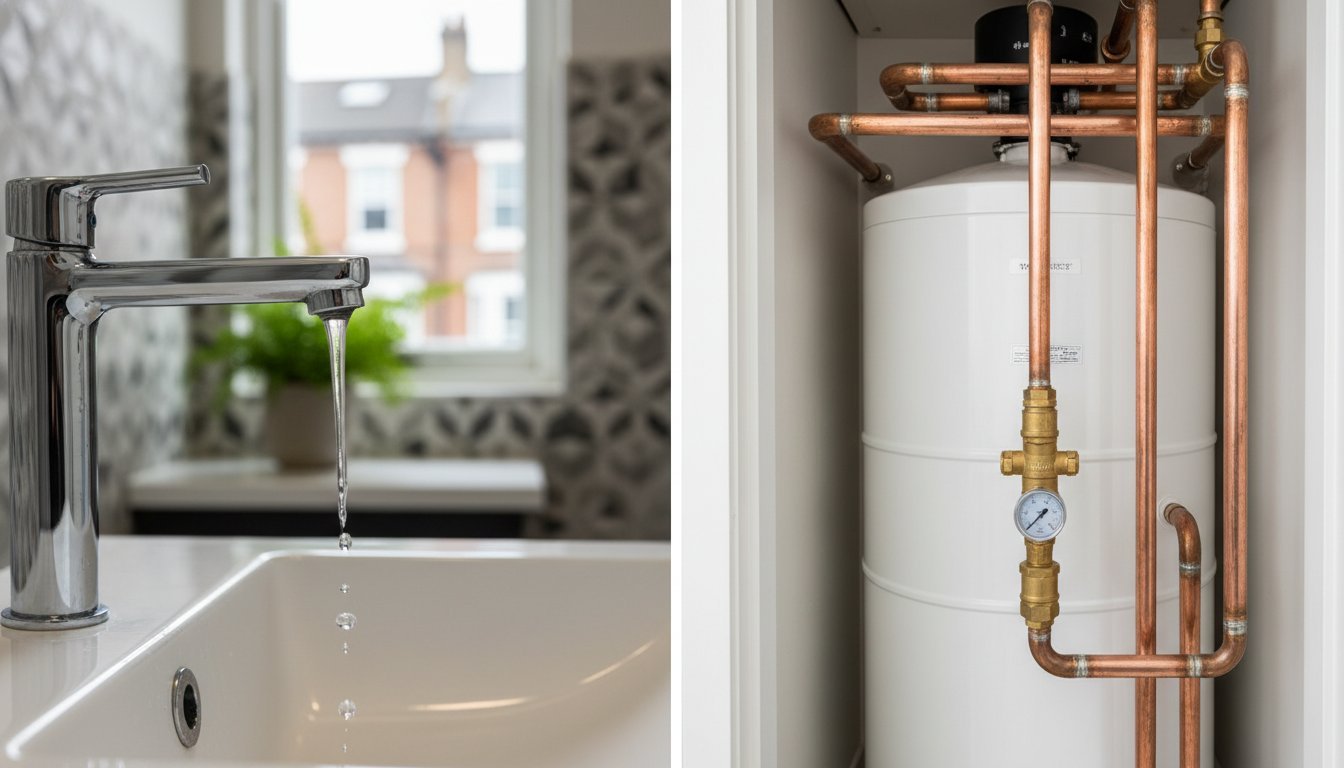
Why does your cold water blast from the tap while your hot water barely trickles? If you're struggling with a weak flow, you're likely dealing with more than just a simple airlock. In London, troubleshooting low pressure from hot water cylinder units often reveals a more complex issue like hard water scale or a failing pressure reducing valve. It's frustrating to deal with inconsistent temperatures and slow-filling baths, especially during the record-breaking heat of May 2026 when local water demand is at an all-time high and infrastructure is under pressure.
You deserve a system that works reliably. We understand the stress of a potential plumbing crisis and the fear of an expensive cylinder failure. This guide identifies exactly why your flow has dropped and provides clear steps to restore your home's comfort. You'll learn how to spot common mechanical faults and understand the specific safety requirements for unvented systems. We'll show you how to distinguish between a quick DIY adjustment and a job that requires a professional engineer to ensure your system remains safe, efficient, and fully operational.
Key Takeaways
Identify whether your property uses a vented or unvented system to determine the likely cause of restricted hot water flow.
Learn to distinguish between localized blockages in a single tap and systemic pressure drops affecting your entire London home.
Begin troubleshooting low pressure from hot water cylinder units by inspecting simple components like the main stopcock and tap aerators for visible obstructions.
Understand the critical role of the Pressure Reducing Valve and why its failure often causes significant drops in unvented system performance.
Recognize when G3-certified expertise is legally required to ensure your hot water cylinder remains safe, efficient, and compliant with UK regulations.
Table of Contents
Why Is My Hot Water Pressure Low? Understanding the Symptoms
Vented vs. Unvented Cylinders: How Your System Impacts Pressure
Why Is My Hot Water Pressure Low? Understanding the Symptoms
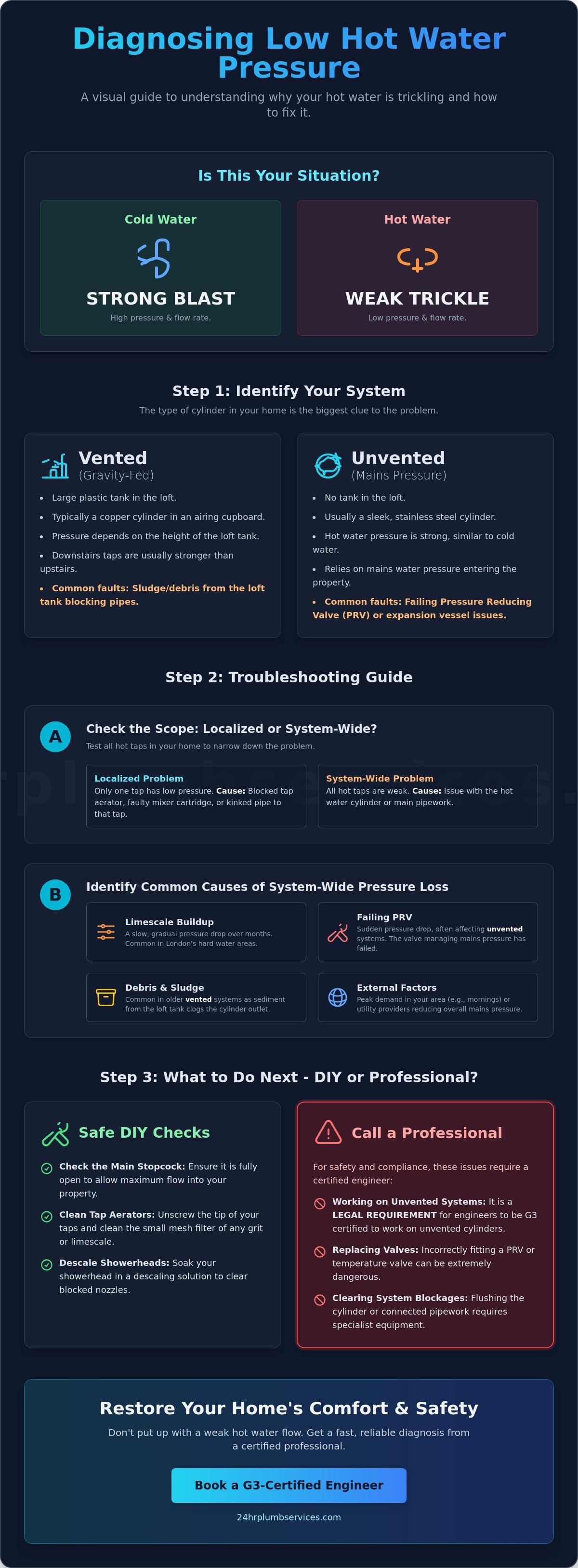
Understanding the difference between water pressure and flow rate is the first step toward a permanent solution. Pressure is the force that pushes water through your pipes, while flow rate is the actual volume of water exiting the tap. If your shower has become a weak trickle, you're likely dealing with a pressure drop that prevents the system from delivering water at the speed you expect. When troubleshooting low pressure from hot water cylinder systems, you must first determine if the issue is a sudden failure or a gradual decline. A sudden drop often points to a mechanical failure in a valve or a major pipe blockage. Conversely, a slow, multi-month decrease usually signals a build-up of limescale within the pipework or the cylinder itself.
The "trickle effect" is a specific symptom where water starts with a brief burst of pressure before quickly fading to a weak stream. This pattern indicates that your system can build up static pressure when the taps are closed but cannot maintain that force once the water begins to move. This often suggests a partial blockage or a failing pressure reducing valve that's struggling to replenish the flow. Recognizing these symptoms early can prevent a total loss of hot water and help you decide if you need an emergency repair.
Localized vs. System-Wide Pressure Loss
You can narrow down the cause by testing every hot water outlet in your home. If only the bathroom basin has poor flow, the problem is localized to that specific tap or its flexible hoses. Faulty mixer tap cartridges or clogged showerheads are common culprits here. However, if every hot water tap in the house is underperforming, the cylinder is the common denominator. Identifying the type of Water heating systems installed in your property is vital. Vented and unvented cylinders respond differently to internal blockages, and knowing your system type is a core part of troubleshooting low pressure from hot water cylinder issues effectively.
The Impact of Peak Demand in London Households
In many London boroughs, the time of day significantly impacts your hot water performance. During peak morning hours, the demand on the local network spikes as thousands of households use water simultaneously. This is particularly noticeable in unvented systems that rely entirely on mains pressure to push water through the cylinder. London’s aging infrastructure is struggling to keep pace with modern demand, with Thames Water rated as "lagging" in overall performance in the 2024-25 Ofwat report. To combat leakage from its ancient pipe network, the utility provider often proactively reduces water pressure across the capital, which directly limits the flow entering your home. During the record-breaking temperatures of May 2026, for example, Londoners used a billion extra litres of water over a single bank holiday weekend, causing widespread pressure drops that many homeowners mistook for cylinder faults.
Vented vs. Unvented Cylinders: How Your System Impacts Pressure
Effective troubleshooting low pressure from hot water cylinder systems starts with identifying the hardware in your home. You cannot apply the same logic to a gravity-fed tank as you would to a modern unvented unit. Look inside your airing cupboard. If you see a copper cylinder with several pipes and a large plastic tank in the loft above it, you have a vented system. If you see a sleek, stainless steel unit with an expansion vessel and no tank in the loft, your system is unvented. This distinction changes everything about how your hot water reaches your taps. Unvented systems are becoming the standard across London because they provide superior pressure without the need for bulky storage tanks in the roof space.
Gravity-Fed Systems and the "Head" of Water
Vented systems rely entirely on the weight of water sitting in your loft tank. This is known as the "head" of water. For every metre of height between the tank and the tap, you gain roughly 0.1 bar of pressure. This explains why your downstairs kitchen tap often feels stronger than the shower upstairs. The closer the outlet is to the tank, the weaker the flow. Common issues include "sludge" or debris settling at the bottom of the header tank. This sediment eventually enters the cylinder and blocks the outlet pipes, leading to a frustratingly slow flow that requires professional Hot Water Cylinder Services to clear effectively. If your tank is poorly insulated, the water can also become a breeding ground for bacteria, making regular inspections a necessity for health and performance.
Unvented Systems and Mains Reliability
Unvented cylinders are the preferred choice for modern renovations. They take water directly from the cold mains, meaning your hot water pressure should match your cold water pressure. This setup provides a powerful, hotel-style shower experience regardless of where the cylinder is located. However, this reliance on the mains makes you vulnerable to external factors. According to Ofwat guidance on water pressure, water companies must maintain a minimum pressure, but aging infrastructure can cause this to fluctuate significantly. In an unvented system, a Pressure Reducing Valve (PRV) manages the incoming force to protect your cylinder from damage. If this valve fails or becomes clogged with scale, your pressure will plummet instantly. Because these are high-pressure, sealed units, troubleshooting low pressure from hot water cylinder units of this type requires G3-certified engineers. These professionals ensure all safety mechanisms, including the expansion vessel and temperature relief valves, remain functional to prevent dangerous pressure build-ups.
5 Common Causes of Low Hot Water Pressure in London
Pinpointing the exact cause is the most critical stage of troubleshooting low pressure from hot water cylinder installations. While every home is different, five primary culprits dominate the London landscape. Identifying these early can save you from a total system shutdown or unnecessary replacement costs. We frequently find that the issue stems from one of the following factors:
Failed Pressure Reducing Valve (PRV): In unvented units, this valve acts as a gatekeeper. It balances high mains pressure with the safety limits of your cylinder. If it seizes, it restricts the flow to protect the tank.
Limescale Accumulation: This is the most common cause in the capital. Mineral deposits narrow the internal diameter of your pipes and heat exchangers.
Internal Gate Valve Issues: A partially closed stopcock or a stuck gate valve near the cylinder can slash your flow rate. These are often accidentally knocked or fail internally due to age.
System Airlocks: Pockets of air trapped in the pipework create physical barriers that water cannot push past, often occurring after a repair or a period of disuse.
Clogged Filters: Debris or "sludge" from the mains can migrate into your system, eventually blocking the internal filters or the cylinder outlet.
The London Hard Water Factor
London is a notoriously hard water area. The water contains high levels of dissolved minerals that solidify when heated, creating a persistent challenge for homeowners. Calcium carbonate deposits create a rough, chalky lining inside 22mm copper piping that gradually chokes the water’s path. By 2026, even relatively new systems remain highly susceptible to this scaling without a high-quality water softener. These minerals don't just coat pipes; they seize moving parts in valves and heat exchangers. This leads to a gradual decline in performance that eventually requires professional intervention to clear or replace the affected components.
Airlocks and Vacuum Issues
Air is lighter than water but can be surprisingly stubborn. If you've recently had a repair or drained your system, air bubbles can become trapped in high points of the pipework. This creates a vacuum effect or a physical blockage. You'll know it's an airlock if your taps "cough" or splutter when you turn them on. The air compresses under pressure, acting like a spring that pushes back against the incoming water. Troubleshooting low pressure from hot water cylinder airlocks often involves high-pressure flushing, but persistent issues might suggest a design flaw in the pipework layout that requires a permanent fix.
DownloadFeedback & RecreateDelete
Troubleshooting Steps: What You Can Check Today
Actionable diagnosis starts at the source. Effective troubleshooting low pressure from hot water cylinder systems involves a systematic process of elimination. You can perform several safe, non-invasive checks before calling for professional help. Start with your valves. Ensure the main stopcock is fully open. Then, locate the gate valves on the pipework leading to and from your cylinder. These can sometimes vibrate partially shut or become restricted by internal corrosion. A simple quarter-turn could restore your flow instantly.
Next, focus on your fixtures. London's hard water is relentless. Unscrew the aerators from your basin taps and soak your showerhead in a descaling solution or white vinegar. If the flow improves at the tap but remains weak at the shower, the restriction is likely within the shower's internal thermostatic cartridge. For those with vented systems, a quick trip to the loft is necessary. Check the cold water header tank. Ensure the ball valve hasn't stuck, leaving the tank empty. For airlocks, some homeowners use the "hosepipe trick" by connecting a high-pressure cold tap to a hot tap to blast air out of the lines. Use this method with extreme caution, as incorrect execution can damage your cylinder's internal seals.
The Visual Inspection Checklist
A thorough visual scan often reveals the root cause of a pressure drop. Examine the area around the Temperature and Pressure (T&P) relief valve. If you see water dripping into the tundish (the plastic hopper on the discharge pipe), your system is over-pressurizing or the valve has failed. Look for verdigris, the green crusty oxidation found on copper joints. This indicates a slow, persistent leak that might be bleeding off pressure. Finally, gently tap the expansion vessel. It should sound hollow. If it feels heavy or sounds solid when struck, the internal diaphragm has likely perished, meaning the vessel is full of water and can no longer regulate system pressure. If you spot these signs, you need Emergency Plumbing Repairs to prevent a total system failure.
When Troubleshooting Becomes Dangerous
Safety is your absolute priority. While visual checks are safe, you must never tamper with the safety valves or internal components of an unvented cylinder. These systems are pressurized vessels. Opening the wrong valve can release scalding water at high velocity, leading to severe injury. Do not attempt to "re-pressurize" your system by adding water through the filling loop unless you have identified where the original pressure went. Constant re-pressurizing introduces fresh, oxygenated water into the system, which accelerates internal corrosion and scale buildup. If the pressure gauge on your unvented unit sits at zero, it is a sign of a serious breach or component failure that requires a G3-certified professional.
Professional Hot Water Cylinder Repairs in London
When your initial troubleshooting low pressure from hot water cylinder efforts fail to restore flow, professional intervention becomes a matter of safety and legality. Unvented hot water systems are classified as pressurized vessels. Because of the potential risks involved, UK law dictates that only G3-certified engineers can work on these units. These regulations ensure that all safety discharge pipes and relief valves are installed and maintained correctly to prevent dangerous pressure build-ups. We provide expert Hot Water Cylinder Services across the capital, combining technical authority with the urgency your household crisis demands.
Our engineers are Gas Safe registered and specifically trained to handle the complexities of London's diverse housing stock. Whether you're in a high-rise central London flat or a period property within the M25, we understand how local water conditions affect your hardware. We don't just guess at the problem. We use precision diagnostics to identify if your pressure drop stems from a collapsed internal baffle, a seized PRV, or a perished expansion vessel diaphragm. This technical approach ensures a fast, permanent fix rather than a temporary patch.
Our Rapid Response Process
We prioritize London homeowners who are facing a total loss of hot water. Our communication is direct and transparent. You'll receive clear diagnostics and honest advice without the distraction of convoluted jargon. We maintain a constant presence across central London boroughs, allowing for a rapid arrival when you need it most. We operate with a no-nonsense approach to pricing and proficiency. Our goal is to provide immediate emotional relief by restoring your home's essential services with the speed and discipline of seasoned professionals.
Ensuring Long-Term System Health
Restoring your pressure is only the first step. To prevent a repeat of the "trickle effect" described earlier, we focus on preventative measures tailored to the capital's environment. London’s hard water will continue to challenge your system unless you take proactive steps. We recommend installing high-efficiency scale reducers to protect your 22mm copper pipework from future mineral blockages. Additionally, annual cylinder servicing is a non-negotiable standard for maintaining your manufacturer's warranty and ensuring your safety valves remain clear of debris. Regular maintenance is the most effective way to avoid the high-stakes stress of a sudden hot water failure. If your flow has already dropped to a trickle, Contact 24hr Plumbing and Heating for immediate assistance to secure a fast, professional resolution.
Restore Your Home’s Hot Water Performance Today
Low hot water pressure shouldn't dictate your daily routine. By identifying whether your system is vented or unvented and checking for localized blockages, you've already taken the first steps in troubleshooting low pressure from hot water cylinder units. London's hard water is a constant factor. It often requires professional descaling or valve replacement to manage effectively. Safety remains paramount. Unvented systems are high-pressure vessels. They require specialized care to keep your household safe and compliant.
Don't let a minor trickle turn into a major emergency. Our team provides a 24/7 emergency response across London. We use only Gas Safe Registered Engineers who are G3 unvented certified to handle your repairs with absolute technical authority. Get 24/7 Expert Help with Your Hot Water Cylinder Now. You can trust us to restore your flow quickly and efficiently. We're ready to help you get your home back to normal.
Frequently Asked Questions
Is low hot water pressure an emergency?
Low hot water pressure becomes an emergency if you lose flow entirely or notice water leaking near your cylinder. A complete loss of hot water disrupts hygiene and essential household sanitation. Sudden drops often signal a failed safety valve or a major pipe breach. If you see water dripping into the tundish or pooling on the floor, you need an immediate professional inspection to prevent flooding or system failure.
Can I fix an airlock in my hot water system myself?
You can attempt to clear a minor airlock by opening all hot taps simultaneously or using a hose to bridge a cold and hot tap. However, this process requires precision. Incorrectly flushing the system can damage internal seals or push debris deeper into the cylinder. If the airlock persists after one attempt, professional high-pressure flushing is the safest way to clear the blockage without risking your pipework.
Why is my hot water pressure fine downstairs but weak upstairs?
This symptom is the hallmark of a vented system relying on a header tank in the loft. Pressure is determined by the vertical distance between the tank and the tap. Upstairs taps are closer to the tank, resulting in a lower head of water and weaker flow. Troubleshooting low pressure from hot water cylinder systems of this type often involves checking the tank height or considering a booster pump for higher outlets.
How much does it cost to fix low pressure from a cylinder in London?
Costs vary based on the required fix and the time of day. Standard London hourly rates typically range from £70 to £80 excluding VAT, while emergency out-of-hours rates are higher. Replacing a pressure reducing valve usually costs between £150 and £400 including labour. A mains booster pump installation can range from £220 to over £400 depending on the model and the complexity of the existing plumbing layout.
What is the G3 qualification and why does my plumber need it?
The G3 qualification is a legal requirement under the Building Regulations for anyone working on unvented hot water systems. These cylinders are sealed, pressurized vessels that can become dangerous if safety valves are incorrectly handled. A G3-certified engineer has the specific training to manage expansion vessels and temperature relief valves. Never hire an uncertified plumber for unvented work, as it invalidates your insurance and risks your safety.
Will a new boiler fix my hot water pressure issues?
A new boiler only improves hot water pressure if you are switching from a traditional vented system to a high-pressure combi boiler. If your current issue is caused by scaled-up pipes or a faulty cylinder valve, a new boiler won't solve the problem. Troubleshooting low pressure from hot water cylinder units identifies whether the restriction is in the heat source or the distribution pipework before you commit to an expensive boiler replacement.
How often should a hot water cylinder be serviced to prevent pressure loss?
You should book a professional service every 12 months. Annual maintenance is vital in London because hard water minerals quickly accumulate in valves and heat exchangers. During a service, an engineer checks the expansion vessel charge and clears any sediment from the filters. This proactive approach prevents the gradual pressure loss caused by limescale and ensures your safety valves remain fully operational throughout the year.
Can a leaking pipe cause low pressure from the cylinder?
A significant leak definitely reduces the pressure reaching your taps. If water is escaping the system, the force behind the remaining flow drops. You might notice damp patches on ceilings, a spinning water meter when no taps are on, or a constantly refilling header tank. Even a small pinhole leak can cause a noticeable decline in performance over time. Professional leak detection is necessary to find and fix hidden breaches quickly.