What if a cold radiator isn’t the real fault? If your heating is on but one room stays chilly, the cause could be trapped air, a faulty valve or a wider heating issue. A leak needs prompt attention too, as water can damage flooring and nearby belongings. With radiator repair Balham, accurate diagnosis matters more than guesswork or replacing parts unnecessarily.
It’s frustrating when a radiator stops working, especially when you’re unsure whether the problem is local or part of the heating system. A heating professional can assess the symptoms, explain the likely cause and outline the next steps before work begins.
This guide covers common radiator faults, what a repair visit may involve and what to ask when choosing a local service. You’ll also learn what information to share when arranging help, so you can work towards restoring reliable heat without unnecessary repairs.
Key Takeaways
Describe whether you have an active leak, a cold spot, slow heating or a fault that keeps returning. These symptoms help explain the urgency.
For radiator repair Balham, a proper assessment should check the radiator, its valves and relevant heating components before work is agreed.
Ask about the diagnosis, proposed work, charges and post-repair checks. Confirm Balham coverage and current availability.
Before the visit, note when the problem began, which radiators are affected and any recent changes. Avoid invasive repairs yourself.
24hr Plumbing and Heating provides radiator repairs and heating services across London and the surrounding M25 area. Confirm whether it currently covers your Balham address.
Table of Contents
How a Balham Radiator Repair Visit Identifies the Real Fault
Choosing a Radiator Repair Service in Balham: Questions Worth Asking
Before Your Radiator Repair Appointment: Safe Steps for Balham Homes
Book Radiator Repair in Balham with 24hr Plumbing and Heating
Radiator Repair in Balham: Which Symptoms Need Attention?
A radiator that stays cold, knocks as the heating runs or leaks onto the floor can disrupt your home and leave you unsure what to do next. The pattern can offer clues, but it won’t confirm the cause by itself. If water is escaping, turn off the heating if it’s safe to do so, keep people away from the wet area and move nearby belongings out of harm’s way.
An active leak, persistent loss of heat or fault that keeps returning needs prompt professional attention. A cool patch may not have the same urgency as water spreading across flooring, but it still needs attention if it persists or affects several radiators.
What do cold spots, noise and leaks indicate?
Uneven heating may be caused by trapped air, a build-up of sludge, a valve fault or an imbalance elsewhere in the heating system. Banging, gurgling or whistling can also point to air, flow or valve issues. These are possibilities, not a diagnosis. A professional needs to assess the radiator and relevant system components.
A leak near a valve or joint may have a different cause from water coming through the radiator panel itself. Note where you see moisture and whether it appears only when the heating is on. If the radiator is cold at the bottom, don’t take it apart or assume sludge is the cause. For a basic overview of how radiators work, see Wikipedia’s explanation of heating radiators.
When should you stop troubleshooting and call for help?
Don’t wait for an active leak to worsen. Turn off the heating if it’s safe, protect nearby items and arrange professional help. Seek assistance if a radiator remains cold despite ordinary checks, several radiators lose heat, or the same problem returns. If you’re not confident, don’t remove fittings, force a valve or attempt a repair that could release hot water.
Active leak: prioritise limiting water damage and getting help.
Persistent cold or noise: note which radiators are affected and when the symptoms occur.
Recurring fault: share what has already been checked or changed.
Radiator water-system issues are different from work on a boiler or gas pipe. Don’t attempt gas work yourself. If the fault may involve gas equipment, ask for an appropriately qualified professional and check the individual engineer’s Gas Safe credentials. For radiator repair Balham, clear details about the symptoms help a professional assess whether the fault appears local to the radiator or may involve wider heating components.
How a Balham Radiator Repair Visit Identifies the Real Fault
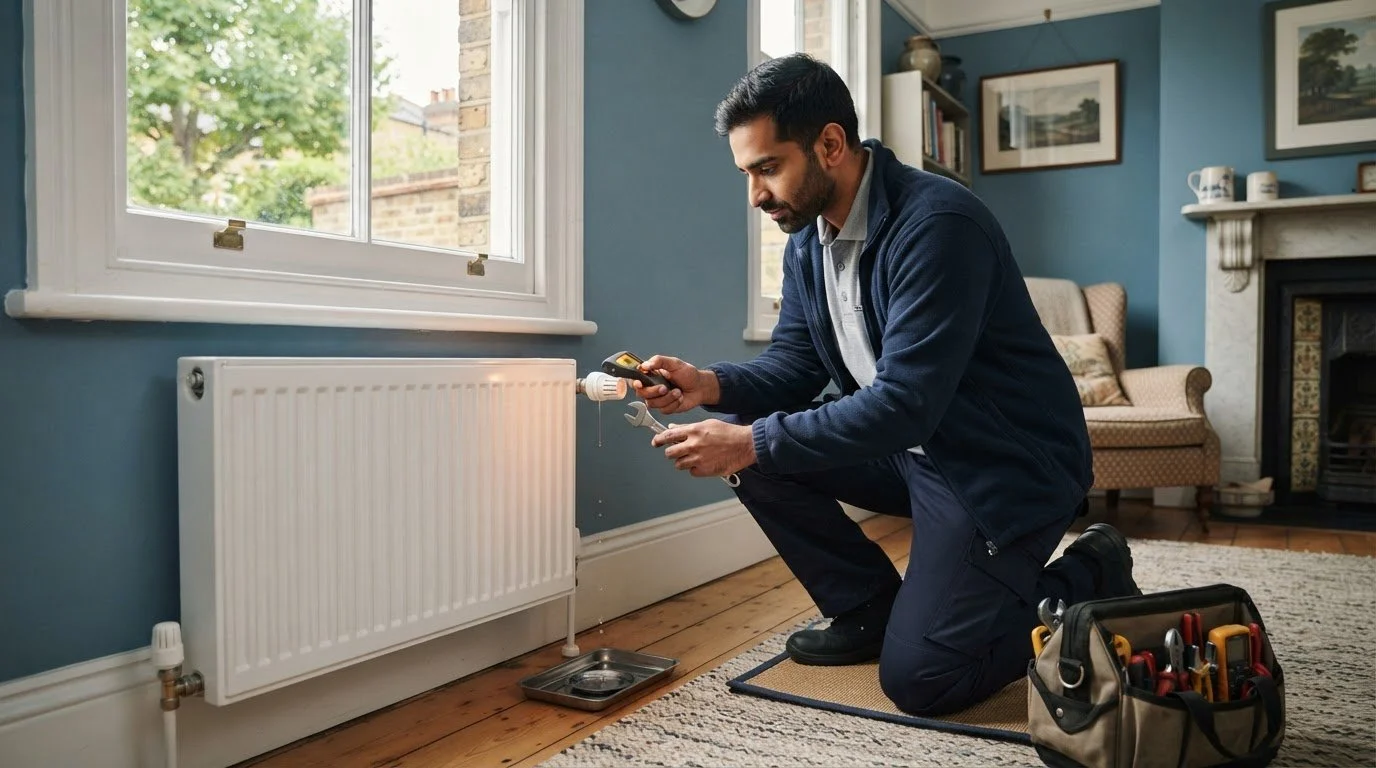
A radiator can be cold because of a local fault or because heat isn’t circulating properly through the wider system. A careful inspection helps narrow down the cause before parts are changed. A radiator repair Balham visit should follow a clear sequence: you describe the symptoms, the engineer checks the radiator and accessible valves, then explains the likely cause and proposed work. After the repair, the system should be checked again.
How can an engineer tell whether the problem is the radiator or the system?
The engineer may compare how the affected radiator heats against others and inspect accessible valves, joints and connections. If several radiators are affected, or the symptoms suggest a circulation issue, they may also consider relevant central-heating components or check the boiler. Those checks depend on the symptoms and inspection. One cold radiator doesn’t prove that the system needs power flushing or that the radiator must be replaced.
Radiator balancing means adjusting how heating water flows around the system so radiators receive an appropriate share. It may be considered if some radiators heat differently from others, but an inspection should establish whether balancing is relevant to the fault.
What happens after the fault is identified?
Before work starts, the engineer should explain what they’ve found and what repair they recommend. The next step depends on the evidence. It could involve repairing a radiator or valve, balancing the system where appropriate, or replacing a component that can’t reasonably be repaired. Ask what the proposed work includes and clarify any charges before agreeing.
After the work, the engineer should check that the radiator operates and inspect the affected connections for signs of leakage. If the inspection points to a wider heating issue, ask what needs further attention rather than assuming the radiator was the only cause. A central-heating repairs guide can help with broader system concerns.
Keep gas-related work separate
Radiator water-system work isn’t automatically gas work. If the issue involves a boiler or gas appliance, use an appropriately qualified engineer and check their Gas Safe credentials. GOV.UK guidance explains how to keep heating and cooking appliances checked safely.
A clear diagnosis, agreed work and post-repair checks make it easier to understand what’s been done and why. For information about radiator repair and heating services, contact a provider and confirm that it covers your Balham address and current needs.
Choosing a Radiator Repair Service in Balham: Questions Worth Asking
A clear explanation of the fault and charges helps you choose confidently, especially if a leak or loss of heat needs attention. Before booking radiator repair Balham, confirm the provider covers your address and has availability that suits your situation. Ask what it can currently offer rather than assuming a particular arrival time.
Use these questions to compare services before agreeing to work:
What to checkWhat to askWhy it mattersScopeDo you handle this type of radiator fault, and do you cover my Balham address?Confirms the service fits the problem and location.DiagnosisWhat do you think is causing the fault, and what inspection supports that view?Helps distinguish an informed assessment from guesswork.Written chargesCan you set out the call-out or labour charges, parts costs and any other applicable charges before work begins?Clarifies what the quoted work includes.After the repairWill you test the radiator and check the connections when the work is complete?Sets expectations for post-repair checks.
What should you confirm before agreeing to radiator work?
Ask the engineer to explain the proposed repair in plain language and identify what the inspection revealed. Check whether the quoted amount covers both parts and labour, or whether either may be charged separately. If further work becomes necessary, ask for the revised scope and charges before authorising it. Confirm whether any follow-up is included and what it covers.
When does a radiator fault point to wider heating work?
If several radiators have recurring problems, or symptoms return after a repair, ask whether the wider heating system needs investigation. That doesn’t automatically mean power flushing is required. The engineer should explain why they recommend broader work and how it relates to the findings. If you need more background, look for a separate guide to power flushing before deciding whether it applies to your system.
A dependable service should make the next steps clear: what’s been inspected, what work is proposed, what it will cost and how operation will be checked afterwards. Confirm these points before giving approval. This can help prevent surprises and keep the repair focused on the fault identified.
DownloadFeedback & RecreateDelete
Before Your Radiator Repair Appointment: Safe Steps for Balham Homes
A few clear details can help an engineer understand the problem before arriving. You don’t need to investigate the pipework or try a repair. Note what you’ve observed, keep the area safe and share the information when arranging radiator repair Balham.
What information helps an engineer diagnose the radiator problem?
Record when the fault began and whether it has changed. Describe the radiator as fully cold, partly warm, noisy or visibly leaking. Note whether the issue affects one radiator or several, and whether your hot water and other radiators are working normally. Mention any recent heating changes, maintenance or repair attempts, even if they didn’t resolve the problem.
Which room and radiator are affected?
When did you first notice the problem, and is it getting worse?
Are other radiators or the hot water affected?
Have you adjusted a valve or had work done on the heating recently?
These observations give the engineer a useful starting point, but they don’t establish the cause. Avoid treating a symptom as a definite diagnosis.
What can you do safely while waiting?
If there’s a small drip, place a suitable container beneath it only if you can do so safely. Keep people, pets and belongings clear of hot surfaces and any escaping hot water. If water is leaking, switch off the heating if it’s safe, and seek professional guidance. Don’t dismantle valves, loosen fittings or touch boiler components.
Bleeding a radiator isn’t the right step for every fault. It won’t address a leak, and opening a bleed valve when you’re unsure may create another problem. If you’re uncertain, leave the radiator alone and report what you’ve noticed. Keep the area accessible for the engineer without moving or handling hot components.
Before the appointment, make a short note of the symptoms and any steps you’ve already taken. This gives the engineer a practical starting point while leaving diagnosis and repair to a professional.
Arrange a radiator repair assessment and share the details you’ve recorded when you get in touch.
Book Radiator Repair in Balham with 24hr Plumbing and Heating
24hr Plumbing and Heating provides radiator repairs and heating services across London and the surrounding M25 area, and operates around the clock. Confirm Balham coverage and current availability when you get in touch. An arrival time or repair outcome can’t be assumed before the team has assessed your request.
A concise description of the fault helps the team understand what kind of help you may need. If there’s an active leak, say so clearly and explain whether water is still escaping. For a cold or noisy radiator, mention which room it’s in and whether other radiators or your hot water are affected.
What to tell the team when requesting radiator repair
Have your Balham address ready, then describe the symptoms and how urgent the situation feels. Include when the problem began, whether it’s getting worse and any relevant changes or previous repair attempts. Ask the team to confirm whether it currently covers your location and what availability it can offer.
Say whether the radiator is leaking, cold, partly warm or making noise.
Explain whether one room or several are affected, and whether the rest of the heating works.
Ask about applicable call-out and labour charges, parts costs and the likely next step before agreeing to work.
How to arrange the next step with confidence
Before work begins, the engineer should explain the inspection findings and proposed repair in clear terms. Make sure you understand what work is planned and what charges apply. After the repair, ask what checks have been completed and whether anything needs further attention. If the symptoms suggest a wider central-heating issue, ask what investigation is recommended and consult a central-heating repairs guide for more context.
Radiator water-system repairs are distinct from work on gas appliances or systems. If the job involves gas, ask whether the engineer is Gas Safe registered and check their credentials. Don’t assume every radiator fault requires gas work.
Request radiator repair in Balham
If you’re dealing with an active leak or a heating failure, explain that clearly when you make contact. A direct account of the symptoms, affected rooms and current heating operation gives the team a practical starting point. Confirm local coverage, availability and charges before arranging the visit.
Contact 24hr Plumbing and Heating to discuss radiator repair in Balham and agree the next step.
Take the Next Step Towards Reliable Heating
A cold or leaking radiator doesn’t always need replacing. Describe the symptoms, have the fault assessed and understand the proposed work before agreeing to it. Sharing which radiators are affected and whether the rest of your heating works can help the team understand your request.
For radiator repair Balham, confirm local coverage and current availability when you get in touch. 24hr Plumbing and Heating provides radiator repairs as part of its heating services across London and the surrounding M25 area, and operates around the clock. Ask about applicable charges and what checks will follow the repair so you know what to expect.
To discuss the fault, contact 24hr Plumbing and Heating and explain what’s happening at home. A clear description and proper assessment can help you take an informed step towards restoring dependable heat.
Frequently Asked Questions
Can a radiator be repaired, or does it need replacing?
Many radiator faults can be repaired, but the right option depends on what an inspection finds. A faulty valve or leaking connection may be repairable, while severe corrosion or damage to the radiator itself could make replacement more suitable. Ask the engineer to explain the cause and compare the proposed repair with replacement before approving work. A cold radiator alone doesn’t mean it needs replacing.
Why is my radiator cold at the top or bottom?
A radiator cold at the top may have trapped air, while a cold patch at the bottom can be associated with sludge or poor water flow. These symptoms aren’t a definite diagnosis. A faulty valve or an imbalance in the heating system may also affect how the radiator warms. Note which areas stay cold and whether other radiators are affected, then share those details with the engineer.
Should I turn off the heating if my radiator is leaking?
Yes, switch off the heating if you can do so safely, especially if water is actively escaping. Keep people and belongings away from the leak and avoid touching hot water or loosening radiator fittings. You can place a suitable container beneath a minor drip if it’s safe, but don’t try to seal or dismantle the connection. Contact a professional and explain whether the leak is continuing.
How long does a radiator repair take?
There isn’t one reliable duration for every radiator repair. A straightforward fault may need less work than a leak requiring further investigation or a problem linked to the wider heating system. The time can also depend on the parts or additional work needed. Ask the provider for an estimate after inspection, and clarify what the quoted work includes before agreeing to proceed.
Do I need a Gas Safe engineer to repair a radiator?
Not every radiator repair involves gas work. A fault in the radiator or its water-system connections is different from work on a gas boiler, appliance or pipework. If the job includes gas work, use a Gas Safe registered engineer and check the individual engineer’s credentials. If you’re unsure whether the problem involves gas equipment, ask the provider before work begins.
Can I bleed a radiator before calling a repair service?
You may be able to bleed a radiator if it’s simply cold at the top, there’s no leak and you’re confident following the radiator or heating-system instructions. Don’t try it if water is escaping, the radiator is hot or you’re unsure how to use the bleed valve safely. Bleeding won’t fix every cause of poor heating, so report persistent or recurring symptoms to a professional.
Does 24hr Plumbing and Heating cover radiator repairs in Balham?
24hr Plumbing and Heating provides radiator repairs across London and the surrounding M25 area, and operates around the clock. Confirm that the team currently covers your Balham address and check availability when you contact them, as a specific arrival time can’t be assumed. For radiator repair Balham, describe the fault, affected rooms and whether other heating is working to help the team understand your request.